This year's Alternative Education Conference, which included creative dance and movement studies in both its opening and workshops, helped increase the awareness and visibility of this new and intriguing field for our country's education.
Braindance movements, which we implemented as an opening event with the participants, was met with interest, and during the application process, participants from different age and education groups who attended the conference from various parts of Turkey and the world, warmed up their bodies and minds with pleasure and established a connection with their bodies. As a result of this study, which they mostly did while sitting, they started the conference more energetic, their listening time increased, and their attention improved.
In addition to the pleasure they get from the work; they understood how natural, doable and improvable the dance action, which is sometimes restricted and limited due to social norms and sometimes high artistic-creative expectations, is.
I think that when this work, which they can easily apply to their daily lives and which can positively affect their physical and mental health, reaches the masses with a little awareness, support and a determined labor process, we can be a more peaceful, happy and conscious society. This idea of mine also applies to creative dance lessons.
Creative dance, which can be used for education, therapy or hobby purposes without worrying about artistic mastery, opens up space for us to express feelings, thoughts and concepts with movement and dance. In the meantime, it improves and develops our movement capacity. As an art form; it develops emotional and mental skills such as creativity, problem solving and cooperation in addition to physical skills with its focus on perception, supporting individual differences and far from competition. (Mac Donald, 1991)
A holistic education programme establishes the connection between body and mind, strengthens this connection and allows it to be felt. Miller (1988) discusses the importance of a connected worldview for children. The key point here is that emotions, thoughts, beliefs and judgements on the inside must be consistent with movements and behaviours on the outside. Creative dance acts as a good balancing and expression tool at this point, engaging the entire being beyond the physical. Children/adults who have experienced creative dance also experience its physical, mental, and emotional effects internally. This is because only the experience of each movement truly becomes internalised and resonates within. Long and deep discussions can be had about creative dance, but the essence of it lies in experiencing it.
According to Dimondstein (1974), creative dance is also a symbolic language, a reflection of what each child perceives in their body and an expression of their unique movement. The music, poetry, and images used by the creative dance instructor in class can also serve as sources of inspiration. In doing so, they utilise various dance and movement techniques.
Creative dance, which can be adapted to learning processes as a learning method (Gardener, Howard 1985), was featured in the workshop titled ‘The Use of Creative Dance in Alternative Education’ at the Alternative Education Conference. Teachers, administrators, and students from both domestic and international backgrounds, aged between 20 and 50 and with diverse teaching experiences, participated… All sought to gain knowledge and experience on how movement and dance can be utilised in education…
During the process, they danced, asked questions, found answers, listened, tried, and experienced… This first experience, which penetrated their bodies and cells, sparked curiosity and enthusiasm for the future among the participants.
The topic ‘Solar System and Planets’ from the third grade primary school life skills course was selected so that participants could use it and adapt it to different levels. The workshop, which included local and adult participants as well as a child and an international participant, proceeded with Turkish and English translation, allowing everyone to both participate in the exercises and observe the process. The workshop, which included experienced teachers and students, newly graduated teachers, and subject instructors, was enriched by the observations and feedback of the participants.
Participating in the workshop, experiencing the planets through the body, understanding their speed and structure, and expressing all this information through dance offered a holistic learning opportunity by incorporating the body, rhythm, dance, movement, and group work into the perception process. The improvisation, spontaneous composition, and choreography exercises practised in the workshop opened a door of encouragement for participants to see the creative expression that exists within them but that they may not be aware of, or may not have had the opportunity or space to use sufficiently, but which is still there...
Is this door sufficient for lasting change? In my opinion, it is not... Contributing to the development of critical thinking, creative, and self-confident individuals through dance or another art form requires regular, long-term work by expert artists and instructors with students. Order is established through continuity and determination, of course while preserving one's identity and remaining open to contemporary innovations and additions as needed throughout the process.
At this point, I believe that the Alternative Education conference can serve as a driving force for our country's educational vision. The intense interest shown in the conference this year was encouraging for me. Many parents and educators were present in the hall to hear and understand the possible contributions of different and new perspectives to the present and future of children, alongside the existing education system. They asked the speakers questions about alternative education practices, examples, and philosophy. I believe that in the future, we will be much more diligent and active in terms of production, understanding, and transmission.
As was the case this year, it is extremely important that academics, expert educators and practitioners who can serve as examples for alternative education, with their vision and experience, participate and share their presentations every year in order to move forward with new educational methods and styles in the rapidly changing dynamics of the world. The reality is that, not only in our country but all over the world, there are events that can lead us to despair alongside many positive developments. If we can structure our education system with a perspective that supports positive developments and learns from negative ones, both we and our children will be much more at peace. What is essential for both our future and the future of the world is an education that protects life on earth and children, respects the essence of existence, and creates space for the constructive potential of each individual to develop: a democratic, egalitarian, participatory education.
References
Dimonstein, Geraldine. (1971). Children dance in the classroom. New York: MacMillan Publishing.
Gardner, Howard. (1985). Frames of mind: The theory of multiple intelligence. New York: Basic Books.
Miller, John. (1988). The holistic curriculum. Toronto: OISE Press.
Mac Donald (1991) Creative Dance in Elementary Schools: A Theoretical and Practical Justification; Canadian Journal of Education / Revue canadienne de l’éducation, Vol. 16, No. 4 (Autumn, 1991), pp. 434-441 Published
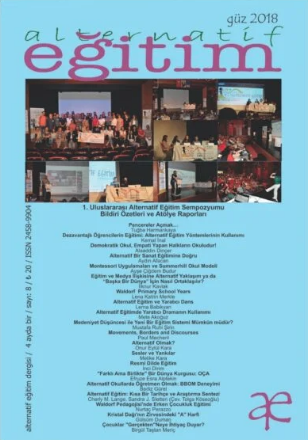
*This article was published in Turkish, in the Autumn 2018 issue of the Alternative Education Journal, Istanbul
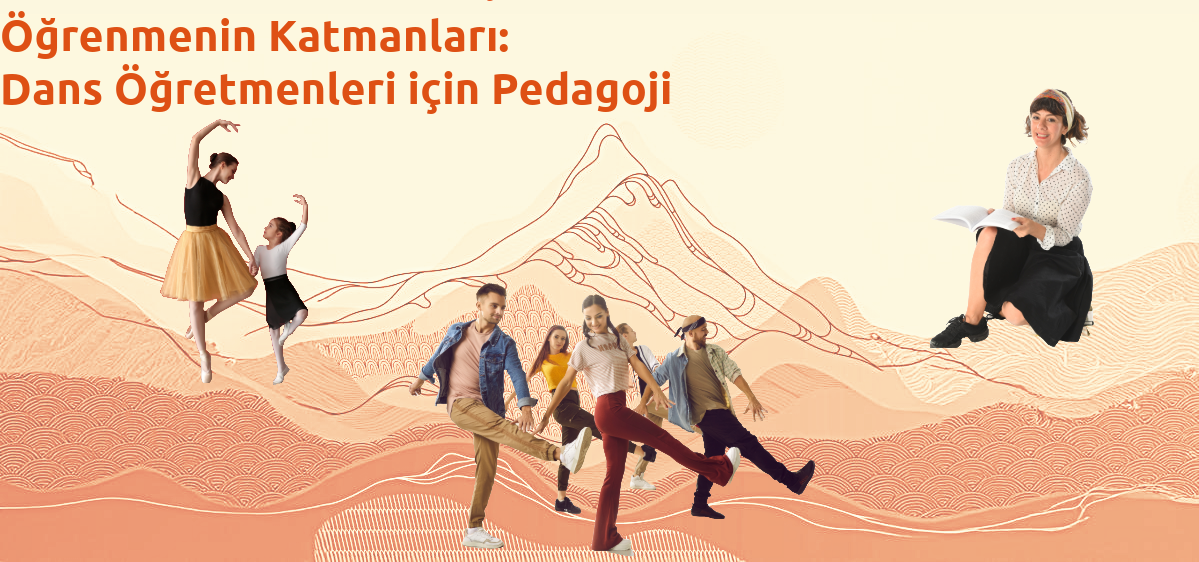
This training is for dance teachers from any style who want to develop themselves pedagogically and for instructors who teach movement-oriented classes!
Although the basic material of dance education is the body, in principle, its education is not different from the learning processes of any other creative field.
If you are an instructor in this field, being trained in a master-apprentice relationship with a dance teacher without scientific pedagogical knowledge may not be sufficient for your professional life in the changing conditions of the time.
Knowing the scientific foundations of the work in terms of educational sciences will increase the quality of your professional practices and make you feel safe, while contributing to the positive change that dance art will create in your students and society.
Ecosomatic Movement and Creative Dance Pedagogy Training
For educators, artists, facilitators, and professionals in health, social work, consultancy and academia
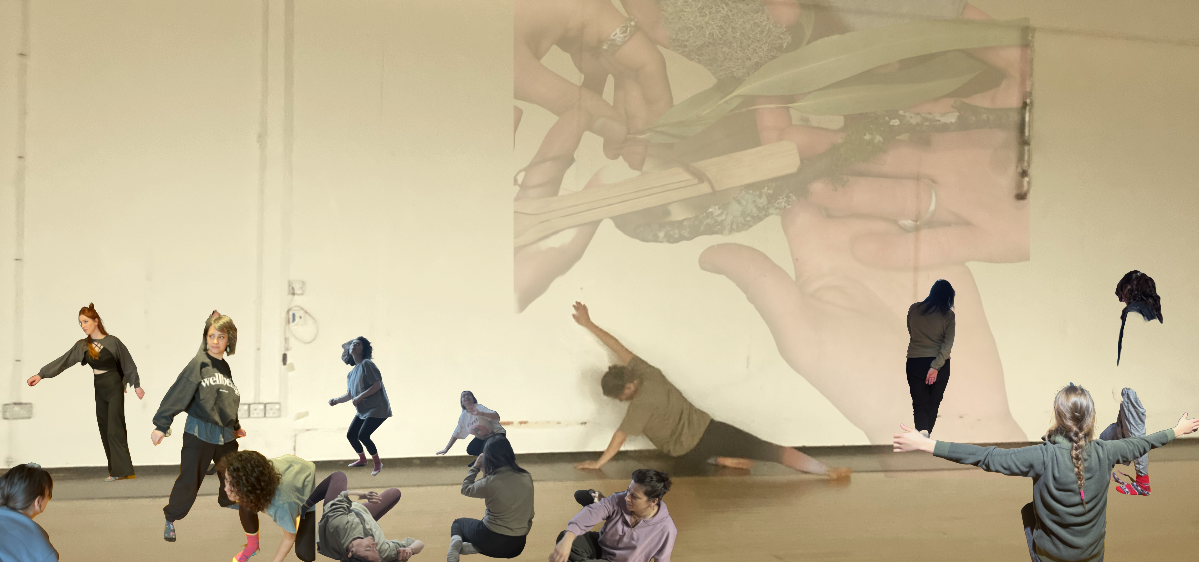
This training is designed for professionals from diverse fields—trainers, educators, artists, consultants, health and social workers—who wish to integrate dance and movement as tools for learning, connection, and transformation. It supports participants in cultivating body-based awareness, creative confidence, and ecological sensitivity within their educational and professional practices.
Originally launched in 2015 as the Creative Dance Trainer Training, the program evolved over the years to respond to contemporary challenges. Since 2023, it has been delivered in a hybrid format that grounds movement learning in ecological thought and ecosomatic practices, aligning body, mind, and environment as co-learners.
Led by Lerna Babikyan, the program offers a rich blend of creative movement pedagogy, body awareness, and contemporary dance history, explored through both experiential and reflective modes. The exercises are designed to be low-risk yet highly activating—awakening participants’ physical, imaginative, and cognitive capacities. The integration of ecological transitions and sensory metaphors in movement invites a holistic perception of interconnectedness, nurturing a grounded sense of “worldliness” and embodied presence.
The program also includes seminars by expert guest instructors, covering topics such as:
Introduction to Dance Therapy
Drama and Dance in Dialogue
Intercultural Dance and the Embodied Self
Designing Effective Learning Environments with Creative Dance
Dance Composition and Choreography
Introduction to the Skinner Releasing Technique
Learning Outcomes
Participants will:
Learn over 140 creative movement exercises across 14 thematic areas, integrating critical pedagogy and ecology-based practices
Gain tools to apply experiential, body-based learning in diverse settings that support emotional, social, and cognitive development
Learn to design inclusive learning spaces grounded in creative autonomy, ecological attunement, and somatic self-trust
Cultivate a joyful, creative, and compassionate relationship with the body—and the more-than-human world
Enhance skills in body language, improvisation, public speaking, and performance
Develop a sustainable, long-term approach to integrating dance and movement in educational, therapeutic, or social contexts
Understand creative dance through lenses of dance history, anthropology, drama, choreography, and embodied education
Strengthen ecosomatic awareness and contribute to pedagogies of sustainability and ecological peace