Category: English

  • Kintsugi Touch to Life

    Kintsugi Touch to Life

    Part 1: Existence

    A drop of water percolated

    though the trans lucifer layers of the universe,

    surrendered her body to the inevitable power of the gravity

    and let her body fall, fall and fall though the lap of the Gaia

    During this journey she heard giggles, laments, howls, hoots, horns,

    She sensed the smell of spring, also the polluted air,

    saw the luminesces of the sea and tepid appearance of cement buildings…

    She embraces the cluster of this duality by remembering her sheer embodied nature

    She was aware of her unifying, purifying and healing notion and the touch which would be the main mediator in this passage through interwoven connection…

    Part 2: Recuperation

    Kintsugi Touch to Life

    Touch has many faces; corporal, visual, literal, auditory and ecologic touch are some of them…In the spring of 2022 I have received my first touch by Schumacher Collage in Reimagining Education Festival. Schumacher Collage was opening me a wide, wise and humble gate to manifest the interelational world of art, nature and science. Shortly after that, I become part of Movement, Mind, Ecology MA program. There I had kintsugi kind of experience where inherited vulnerabilities, damages of colonial systems and academic cracks were filled though experiential compassioned action of learning, research, creativity and science with ethics of care to all living beings instead of a gold powder.

    I grew up in Turkey where being vulnerable is considered mostly as a cursed state, related with weakness, failure and abandonment. However, in the last decade well accepted psychologists verify being vulnerable as a normal result of unpredictable, risky situations, instead of labelling it as a weakness. The perception of the word has started to change in the word of mouth of societies.  

    Brené Brown who claims “vulnerability is the birthplace of innovation, creativity and change” has been inviting us see vulnerability form a new direction which might lead us to recovery, resilience and empowerment. Schumacher Collage had likewise approach to our vulnerabilities too; It has been an institute which works through the perspective of unity, sustainability, recycle, creativity and this approach was not only applicable for material world but emotional, moral word of humans, more than human world as well.

    As walked to Schumacher Collage’s gate I was literally traumatized of being undermined and unrecognized in my academic life in my home country. As a professional educator with many years of experience in formal and non-formal school settings, I was having difficulty to accept unequal, disregardful behaviours of tutors, directors who are in power in higher education institutions. Sadly, discrimination and sometimes censorship has been already accustomed, even accepted as the right of the person who was highest level of that vertical hierarchy, by the students and some of the tutors as well. I could see that my two years of research with different advisors was losing its significance by arbitrary reasons of procrastinations by the head of the department. I was being precluded to graduate from that master’s program like many others. Furthermore, having another shock from the silence and/or ignorance to my brutal experience by the majority of my dance colleagues too.

    Back then, while I was redefining, what is real friendship in connection to ethics of care and reshaping my life, I also started to write a book on creative dance pedagogy mainly for children and let myself to be an independent researcher. However, I was exposed to systematic invisibility like many who are “the other” who thinks different, manifests different, behaves different then mainstream in a non-inclusive environment. Eventually when my book has been published, which was one of the rare productions in this field in Turkey; never received any oral or written feedback about my book from those circles. French philosopher and psychoanalyst Anne Dufourmantelle’s following words from her book “In Praise of Risk” was resonating with my awakening process; Disobedience is the traversal of mirages, a manner of light heartedly breaking bonds, because one has agreed to lose everything, including life. The places and people where I were feeling the belonging was diminishing day by day, I was sensing there was not any future for me there.

    This was partly the story behind my graduation piece, which was an act of re-gaining freedom for me.  I started my research; dove in between generations, words, lines, plants, languages, states and related cluster of emotions inspired by my grandfather’s displacement story. During the process of making this piece I was not alone; flaxes, fallen barks, dried leaves and mosses that I found from Schumacher Collage campus were with me on the stage. Their resilience, flexibility and transformation were reminding me everlasting change of the life, forms and stories.

    My research in Schumacher Collage been nourished by regenerative cycles of ecologic life, history, alternative pedagogies, ecosomatic practices and ecojustice approach, indigenous languages and inclusive, participatory approach to performing arts filed. My advisor Dr. Rachel Sweeny and tutor Dr. Marie Hale were holding the space tenderly for my curiosity and giving me the support by remarkable suggestions such as how to use the action research as a scientific method and ethics of the research. Additionally, Satish Kumar’s extremely humble, attentive existence in the campus, the way he listens us has been catalysing the mission of Schumacher Collage.

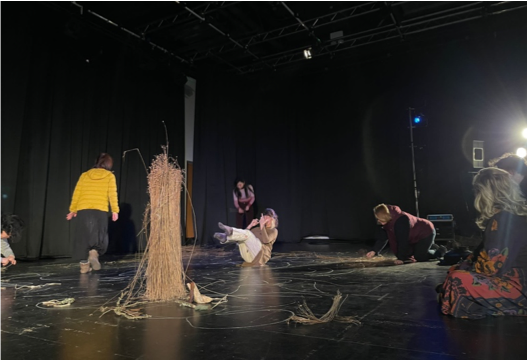
    In January 2023, I got invitation to run a volunteer ecosomatic workshop Dr. Rachel Sweeny for students, happily I accepted this idea to share cumulative information and experience, resourced by my studies in Movement, Mind, Ecology MA program. Some of the participants has arrived with a bit of hesitation to dancing and moving; however, they trust the process, listen the space, their bodies and the bodies of ecologic beings; they move with them or being moved by them in their creative expressions.

    Figure 1 Moment from ecosomatic workshop, January 2024, Dartington, Studio 6

    Next days, Schumacher Collage students and volunteers, some of my students and colleagues from Istanbul become part of my action research. They reflect and “I“ compose, reshape and create my performative, embodied, participatory graduation piece.

    Here I would like to give a short break to my writing by digging in to “I”;

    I can once again see from my experience
    I have explained above the big “I” is actually “We”;
    we – Schumacher Collage, founders, students, snow drops, trees, mosses, research participants, tutors, Julia’s Kitchen Henri’s Field, flaxes, volunteers, office staff and many more…

    Part 3: Action

    I expanded “we” by my participatory performance as a graduation piece; audience did not only watch the performance but hear, move, touch, create and connect. I have performed that piece in Small is Beautiful Conference, Dartington 2023, then in Impulstanz Festival-Lace Symposium, Vienna, 2024 in a lecture performance format.

    Figure 2 Performing my graduation piece "Carthographic Echoes" in Small is Beautiful Symposium, March 2024

    Figure 2 Performing my graduation piece “Carthographic Echoes” in Small is Beautiful Symposium, March 2024
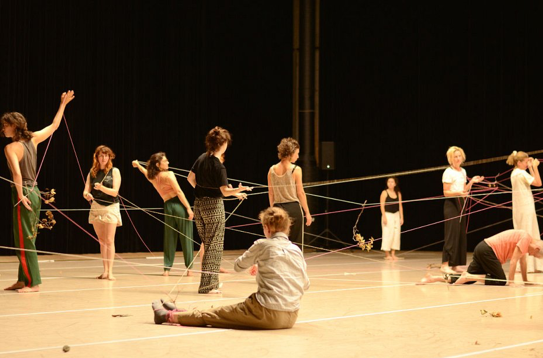
    Figure 3 Carthographic Echoes as a participatory, lecture performance,Impulstanz-Lace Symposium, Vienna, August 2024

    Figure 3 Carthographic Echoes as a participatory, lecture performance,Impulstanz-Lace Symposium, Vienna, August 2024

    During that period, I was also applying to performing arts festivals in Turkey, nonetheless getting rejections. I had something to share with my homeland and I did not want to give it up. Eventually I arranged a performance for December 2024 in a stage called Duende Theatre, Istanbul. Before my journey to Istanbul, I did an open rehearsal; Schumacher Collage Alumni has joined and gave wonderfully constructive, helpful feedback by using the method of Critical Response Process by Liz Lerman.

    Finally, I was feeling ready to share the Schumacher Collage values with the people in Istanbul. Although I met some difficulties during rehersal period as an independent artists on some practicalities; participation of the audience added more layers to the process by changing the space, widening the multidisciplinary connection and communication in between us. Displacement is globally unpleasant topic to interact, once I started to perform, I felt myself and audience has transformed to weavers who waves different yarns, textures, colors, lines, wishes and stories and eventually we able to move beyond the story.
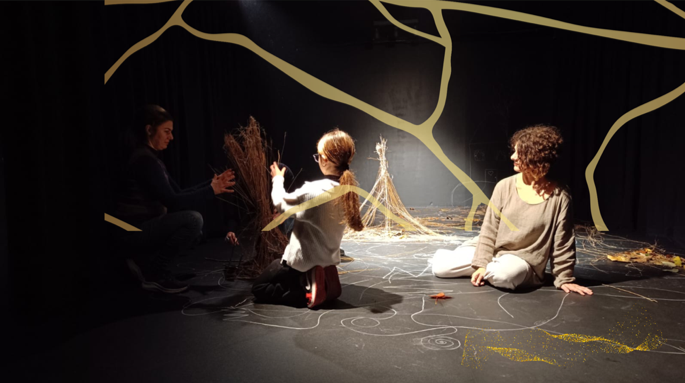
    Figure 4 Moment from Cartographic Echoes, Duende Theater, Istanbul, December, 2024

    Figure 4 Moment from Cartographic Echoes, Duende Theater, Istanbul, December, 2024

    After the performance all of the audience wanted to stay for written feedback session about the experience they have just joined and/or witnessed. They wrote 15 minutes in a collective silence, you can see some of them below. However even after writing they did not want to leave the theatre, then we had Q&A session where people shared their ideas and feelings about the performance and the relationality of life, politics and environment too.

    “I felt myself like in an art therapy session”

    “..home and belonging feels warm…”

    “..reminded me the games I played when I was a child…”

    “in case to feel the power of starting again from the point where you fall down, you need to get support from the floor/earth”

    “..feeing the soul of the forest..”

    “…Anna Halprin’s home studio..”

    I always believe in the necessity and the benefits of community art experiences. The elongations in time that we experienced after the performance was revelled their need to share their expressions and give a voice in the community.  Today we-artists- need places which have inclusive and democratic management structures to align with the values of participatory art practice. Also, being aware of the politics of visibility, sometimes make counter actions then mainstream choices will open bring us new dimensions, multicultural encounters and support the democracy culture as well.

    Part 4: Spiralling

    Shortly after my graduation, I started to engage ecologic values, elements and aspects to my Creative Dance Teacher Training program which helped me to shake and reshape the program by being “Ecology Based”. I constructed some of the session of the training in forests of Istanbul where participants able to observe, connect and reflect the nature though dance and movement.

    Over six months the group has experienced many moments of experiential, body-based learning, creativity, sharing, collaborating and astonishment too. For example, one of my students felt touched a lot when she learned about the animal called Tardigrade (water bear), ashamed of her judgements to this species’ body shape and eventually start to cry while learning more about this animal’s features. Followingly, she developed deep admiration and love to the Tardigrade
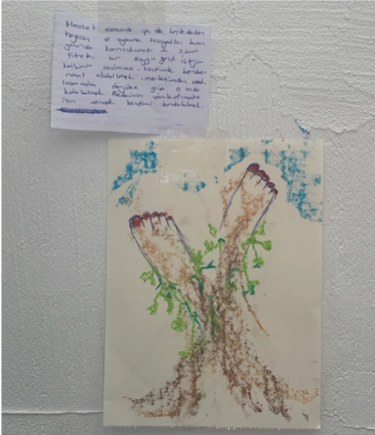
    Figure 5 Reflection from a student of Ecology Based Creative Dance Teacher Training Workshop, Istanbul, Cati Dans, July 2024

    Figure 5 Reflection from a student of Ecology Based Creative Dance Teacher Training Workshop, Istanbul, Cati Dans, July 2024

    That moment was not just transformative for her but touched each of us in the group as well. In their graduation performance they slowly occupy the space like meadows. While minimal music and a Zen poetry was accompanying them, they were performing their solos, duos and group dances.

    Part 5: Landing

    It takes such a long time for me to finish this writing, many times I found myself in front of computer and could not move, write or  edit…It was challenging for me to go back to those days of darkness; I had struggled a lot with asking many times similar questions to heal my pain, trying to find right answers for the way out from that narrow, boggy geography. Schumacher Collage has opened the doors of relief, empowerment, recovery and I was able to reclaim my passionate actions on arts, academics and ecology.

    I can admit that, this writing is a farewell to those painful geographies; I am feeling the transformation of my heart from a rock to tranquil, bright, blue sea with no regret, revenge or fear inside.

    Have you ever said goodbye to place or a state? Did you look around for last time? remembering moments, memories, emotions and shades… Here I am celebrating my story of embodying pedagogy, performance and ecology from new perspectives and share my experience as well, while remembering the possibility that maybe the geography did not change but the seeds, their sprouts are on their way to trees…May all embrace life with love and serendipity…
  • Seeking Wholeness in a New Life: Boundaries and Fine Lines

    Seeking Wholeness in a New Life: Boundaries and Fine Lines

    I am starting life anew in a small village in England, and I am just beginning to understand my relocation here, together with the intimate life my husband and I have established. I sometimes watch the days of pouring rain with gratitude, and at other times, I take walks under the rain; contact with the water element clears my mind. I observe the waterways that accumulate and flow in unexpected places, and the robin that suddenly touches a puddle to take a sip. I watch the movement of the clouds reflected in the water from the ground. During these observations, noticing the effect of the sound of flowing water and the flow of my own inner ‘waters’ in my body relaxes me; the tensions in my muscles give way to softer tissues.Then the sun comes out. I observe the feelings the changing light creates in the landscape and within me, the shifts in my way of perceiving life, and the variable relationships different beings have with light, just as they do with water. At times, I let my body go into the movement of the trees, branches, and bushes, swaying and being tossed freely in nature. Feeling that I exist as a reciprocal part of nature, through my body and senses, strengthens my sense of confidence and wholeness. Furthermore, sharing an equal life with other species in this space, free of concepts of ownership and power, increases my resilience in the face of difficult moments.

    Ecosomatic practices, which are also experiential learning practices, are being widely used globally by experts in various fields—in addition to dance—such as psychology, education, art therapy, healing architectural design, and climate activism. This is because they develop skills like sensory awareness and empathy, and can help re-establish the lost connection with the ‘Other.’

    The primary reason that brought me to a small village among the hills, rather than a well-known metropolis like London, was the school where I was pursuing my Master’s degree, which was institutionalized around an ecological perspective. It was here that I encountered the ecosomatic movement practices I experienced above and the related literature. The purpose of ecosomatic studies is to rekindle an awareness-based connection between the human body and nature.Unlike the mainstream studies mostly conducted in nature up to now, in ecosomatic practice, neither our body nor nature is used as a tool for developing creativity or achieving a state of well-being; instead, the priority is to feel what it is like to have an equal, shared life experience and to remember that we are intrinsically and essentially connected to one another again. Of course, the development of our creativity and the feeling of well-being are also possible through the new perspectives we gain during this process.

    Ecosomatic practices, which are also experiential learning practices, are being widely used globally by experts in various fields—in addition to dance—such as psychology, education, art therapy, healing architectural design, and climate activism. This is because they develop skills like sensory awareness and empathy, and can help re-establish the lost connection with the ‘Other.’

    Influenced by the training I received, I also began applying an ecology-based approach to the Creative Dance Instructor Training Workshop I have been running in Istanbul since 2015, starting in 2024. During one of the hybrid program’s online sessions, I was sharing the movements and physical characteristics of the tardigrade (water bear) with my students. Shortly after, one of my students started crying; she expressed deep regret for the prejudice and distance she had initially developed towards this creature whose appearance she disliked. This confrontation made her acutely feel the pain of how often we exclude each other—both individually and socially—through similar prejudiced experiences in the rush of daily life. This student, a woman who is both very graceful and strong, had probably internalized the insensitive and judgmental attitudes of others besides herself that day. The class concluded with the poem she wrote for the tardigrade; all our eyes were wet, but this time, from compassion.

    Compassion is not just an emotion; it is a state of action that transforms our lives in a positive sense. However, compassion-based ecosomatic practices are by no means a new discovery for humanity. We know from their surviving forms of production, artworks, lifestyles, and rituals that in sedentary societies living in different historical periods—especially before their lands and cultures were invaded and destroyed by colonizers—their holistic relationship with their bodies and their environment was very vibrant, built upon awareness and mutual sensitivity. These communities’ use of the body together with dance, movement, rhythm, and songs in their ceremonies for healing, production, harvest, mourning, transition, and celebration contributed to the holistic health of their relationship with their own bodies. At the same time, it reminded the community of the vital importance of the relationship between human and non-human beings by revitalizing the connections between all bodies.

    As people migrated or were forced to migrate over time, and were distanced from the lands that sustained them in every sense, some rituals disappeared while others changed form, and the individual’s way of relating to themselves and their environment shifted. The reflections of these changes and losses also manifested in social life. The colonial-capitalist order, which destroys what exists and imposes its own system, along with the patriarchal state of being, makes space for the existence of itself and only the people and practices it approves of, in the economy, in culture—in short, in every area of life. Sometimes this pressure even crosses national borders, allowing the invasion of other countries with its own culture, based on existing power relations and economic or military strength. The rights offered to the excluded, often presented as a ‘favor’ under the guise of inclusivity, can still only reach a small minority.

    To conclude my writing, I also want to briefly mention my first experience of ‘otherness’ in my second and new homeland. I arrived in a new country, bringing with me a career spanning nearly thirty years, primarily centered on dance facilitation. This autumn, as I begin to feel settled, I am starting everything anew in a village where no one knows me. Because children’s dance classes and parent-child classes—which I stopped giving in Turkey about ten years ago, feeling the need to change my way of relating to them—are the best work I know, I am taking my first steps into this unknown territory with them. Even though my work has just started, it is being followed with interest.

    A few days ago, I went to a book promotion event related to dance. Afterwards, I met a British woman who owns one of the region’s leading dance schools, and we chatted briefly due to our prior acquaintance. Suddenly, she started talking about the classes I had recently begun giving, and immediately added, ‘Why don’t you put your workshop brochures in the venues where we teach? We have so many students that we sometimes have to turn some away because we don’t have space. We could direct them to your classes,’ she said, somewhere between a laughter and a roar. This statement, with various inflections at different points, hung in the dark of the night. Was it a sensitive and compassionate invitation, or was it a reminder that underscored her regional commercial dominance, implying I could only enter this sphere as much as she permitted? When I shared this monologue with an experienced and trusted colleague who drove me home that night, she noted that people can adopt different personas for their work. It was as if I encountered the UK’s version of this situation, which I was familiar with in Turkey, but now cloaked in grace and intelligence. Evidently, not everyone who facilitates body-based sessions has the same sensitivity.

    When I woke up the next day, I decided to make my voice louder. This decision was more a prayer to myself than an aim for competition or proof: it was my belief that I would continue my journey without fear, without being ashamed of my existence, and with my strongest, most embodied self, my experiences, and my creativity. I hope this prayer reaches every individual who is in need, who has been pushed outside the system, whose existence and creations have been ignored, and who has been othered.

    This artical has published in Agos Weekly Newspaper https://www.agos.com.tr/en/article/36396/seeking-wholeness-in-a-new-life-boundaries-and-fine-lines?fbclid=IwY2xjawOiTeRleHRuA2FlbQIxMABzcnRjBmFwcF9pZBAyMjIwMzkxNzg4MjAwODkyAAEeaYX8mx2J4UGyrrv2npxwKaOFXxhlE7VqbTQBiSJRdXoso80nzkWMcuWZvD4_aem_pmvR4YjIs-B95PCPd3k1kA

  • Alternative Education and Creative Dance


    This year's Alternative Education Conference, which included creative dance and movement studies in both its opening and workshops, helped increase the awareness and visibility of this new and intriguing field for our country's education.

    Braindance movements, which we implemented as an opening event with the participants, was met with interest, and during the application process, participants from different age and education groups who attended the conference from various parts of Turkey and the world, warmed up their bodies and minds with pleasure and established a connection with their bodies. As a result of this study, which they mostly did while sitting, they started the conference more energetic, their listening time increased, and their attention improved.

    In addition to the pleasure they get from the work; they understood how natural, doable and improvable the dance action, which is sometimes restricted and limited due to social norms and sometimes high artistic-creative expectations, is.

    I think that when this work, which they can easily apply to their daily lives and which can positively affect their physical and mental health, reaches the masses with a little awareness, support and a determined labor process, we can be a more peaceful, happy and conscious society. This idea of ​​mine also applies to creative dance lessons.

    Creative dance, which can be used for education, therapy or hobby purposes without worrying about artistic mastery, opens up space for us to express feelings, thoughts and concepts with movement and dance. In the meantime, it improves and develops our movement capacity. As an art form; it develops emotional and mental skills such as creativity, problem solving and cooperation in addition to physical skills with its focus on perception, supporting individual differences and far from competition. (Mac Donald, 1991)

    A holistic education programme establishes the connection between body and mind, strengthens this connection and allows it to be felt. Miller (1988) discusses the importance of a connected worldview for children. The key point here is that emotions, thoughts, beliefs and judgements on the inside must be consistent with movements and behaviours on the outside. Creative dance acts as a good balancing and expression tool at this point, engaging the entire being beyond the physical. Children/adults who have experienced creative dance also experience its physical, mental, and emotional effects internally. This is because only the experience of each movement truly becomes internalised and resonates within. Long and deep discussions can be had about creative dance, but the essence of it lies in experiencing it.

    According to Dimondstein (1974), creative dance is also a symbolic language, a reflection of what each child perceives in their body and an expression of their unique movement. The music, poetry, and images used by the creative dance instructor in class can also serve as sources of inspiration. In doing so, they utilise various dance and movement techniques.

    Creative dance, which can be adapted to learning processes as a learning method (Gardener, Howard 1985), was featured in the workshop titled ‘The Use of Creative Dance in Alternative Education’ at the Alternative Education Conference. Teachers, administrators, and students from both domestic and international backgrounds, aged between 20 and 50 and with diverse teaching experiences, participated… All sought to gain knowledge and experience on how movement and dance can be utilised in education…

    During the process, they danced, asked questions, found answers, listened, tried, and experienced… This first experience, which penetrated their bodies and cells, sparked curiosity and enthusiasm for the future among the participants.

    The topic ‘Solar System and Planets’ from the third grade primary school life skills course was selected so that participants could use it and adapt it to different levels. The workshop, which included local and adult participants as well as a child and an international participant, proceeded with Turkish and English translation, allowing everyone to both participate in the exercises and observe the process. The workshop, which included experienced teachers and students, newly graduated teachers, and subject instructors, was enriched by the observations and feedback of the participants.

    Participating in the workshop, experiencing the planets through the body, understanding their speed and structure, and expressing all this information through dance offered a holistic learning opportunity by incorporating the body, rhythm, dance, movement, and group work into the perception process. The improvisation, spontaneous composition, and choreography exercises practised in the workshop opened a door of encouragement for participants to see the creative expression that exists within them but that they may not be aware of, or may not have had the opportunity or space to use sufficiently, but which is still there...

    Is this door sufficient for lasting change? In my opinion, it is not... Contributing to the development of critical thinking, creative, and self-confident individuals through dance or another art form requires regular, long-term work by expert artists and instructors with students. Order is established through continuity and determination, of course while preserving one's identity and remaining open to contemporary innovations and additions as needed throughout the process.

    At this point, I believe that the Alternative Education conference can serve as a driving force for our country's educational vision. The intense interest shown in the conference this year was encouraging for me. Many parents and educators were present in the hall to hear and understand the possible contributions of different and new perspectives to the present and future of children, alongside the existing education system. They asked the speakers questions about alternative education practices, examples, and philosophy. I believe that in the future, we will be much more diligent and active in terms of production, understanding, and transmission.

    As was the case this year, it is extremely important that academics, expert educators and practitioners who can serve as examples for alternative education, with their vision and experience, participate and share their presentations every year in order to move forward with new educational methods and styles in the rapidly changing dynamics of the world. The reality is that, not only in our country but all over the world, there are events that can lead us to despair alongside many positive developments. If we can structure our education system with a perspective that supports positive developments and learns from negative ones, both we and our children will be much more at peace. What is essential for both our future and the future of the world is an education that protects life on earth and children, respects the essence of existence, and creates space for the constructive potential of each individual to develop: a democratic, egalitarian, participatory education.

    References

    Dimonstein, Geraldine. (1971). Children dance in the classroom. New York: MacMillan Publishing.

    Gardner, Howard. (1985). Frames of mind: The theory of multiple intelligence. New York: Basic Books.

    Miller, John. (1988). The holistic curriculum. Toronto: OISE Press.

    Mac Donald (1991) Creative Dance in Elementary Schools: A Theoretical and Practical Justification; Canadian Journal of Education / Revue canadienne de l’éducation, Vol. 16, No. 4 (Autumn, 1991), pp. 434-441 Published

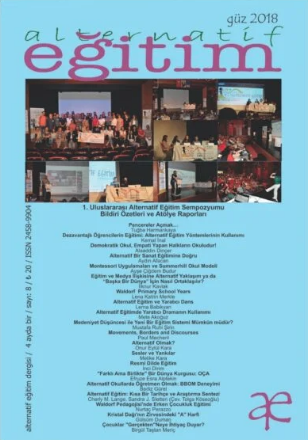
    *This article was published in Turkish, in the Autumn 2018 issue of the Alternative Education Journal, Istanbul

  • Daylighting

    My perception of and relationship with dance and performance have evolved significantly since graduating from a related bachelor’s program in Istanbul. Initially rooted in set movements and result-oriented dance performances, my practice expanded towards interdisciplinary improvisations, site-specific explorations in urban spaces, nature, and the profound ancient landscapes of the Aegean coastline. This journey became a process of unlearning and reflecting on a desire to broaden the scope of my performativity—once deeply intertwined with indigenous cultures—beyond the confines of the “black box” into alternative and traditional performance settings.

    This exploration continued until the onset of the pandemic, which forced us into restricted movement and led to diverse bodily research within the domestic space. During this time, I revisited televised stage performances and encountered works by emerging choreographers with innovative stage designs. This rekindled my admiration for the stage, compelling me to reconnect with the stage while integrating my past experiences and future aspirations.

    The seed of my idea was to create a participatory performance—one that dissolves the boundary between audience and performer, fostering a communicative space through movement, contact, expression, and collective creativity. My conceptual map was drawn from the displacement and misplacement story of my grandfather. Through performance, I sought to empathise with his emotions and efforts on making a new, unknown place home. Using my body and chalk, I traced lines of searching for belonging, while audience contributions transformed the space into a shared act of homing. This process of embodiment, collective memory, and reimagining mirrored a kind of daylighting—the act of bringing hidden narratives and histories back to visibility, much like reviving lost rivers.

    Cartographic Echoes became my first officially produced piece in England. Alongside my audience, I engaged with non-human bodies—bark, flax, dried leaves, and mosses on the stage. Moving with and through these elements, sensing their textures, scents, and forms, allowed my body to transform, deepening my ecosomatic awareness and expanding my sense of presence beyond natural environments. These organic materials reminded me of both the fragility and resilience in life, exposing the fluidity of time concept and our capacity to move beyond imposed linearity of it. They echoed the long-standing companionship between humans and plants, reinforcing a profound connection to the natural world. Through this performance, I was able to write and rewrite my grandfather’s story—alongside countless other shared narratives of displacement—stories that remain timeless and universal.

    Last but not least, I want to express my deep gratitude to the collaborative environment provided by Schumacher College, Dartington Arts, and Plymouth University. The convergence of academic insight merged with artistry, holistic philosophy, and ecological awareness created fertile ground for my research and for the realization of this daylighting experience. Under the guidance of Dr. Rachel Sweeney, I was encouraged to access and trust the authentic layers of my creative self—particularly those tied to my cultural memory and mother tongue. Sensing the inclusive atmosphere through her mentorship not only created a safe and rigorous space for exploration, but also helped me understand how my voice could emerge with greater clarity and confidence, free from external expectations or the need to translate myself into other frameworks.

    Finally, this performance, and the process of developing it, became a pivotal point in my journey as an artist. It expanded my perception of the stage as a living site for dialogue, remembering, and transformation. This experience didn’t just add to my artistic toolkit—it also empowered me to move forward with deeper integrity, resilience, and rootedness in body, story and ability to go beyond the stories by multiplied ways of applied research and performance.

    *This writing has been published online with the invitation of Funmi Adewole, De Montfort University https://www.fepdn.net/2025/05/09/449/

  • On the Memory of Transformation in Dance Education from the Critical Pedagogy Conference

    The Critical Pedagogy Congress was held in Ankara between November 29 and December 2, 2024 with the support of Eğitim Sen, Sivil Düşün, Birarada Association, ODTÜ Alumni Association and Töz Publications. The rich program, which included presentations from local and foreign academics who have been working in the field of Critical Pedagogy for a long time, as well as academics, social workers and researchers who work through the lens of critical pedagogy in different disciplines such as history, sociology, art and religious education, was met with great interest from participants from different cities of Turkey, especially Ankara

    The congress, whose stakeholders were brought together by Prof. Kemal İnal, began with the opening speeches of doyen academics in adult education and critical pedagogy such as Peter Mayo. During the conference, presentations and workshops were held on many different topics that have gained importance worldwide in recent years, such as migration pedagogy, anti-racist pedagogy, feminist pedagogy, ecological pedagogy, queer pedagogy, and gender equality.

    What emerged from my observations in all these presentations and workshops was the intense need and interest in competent actions, discussions, and exchanges of ideas on the above-mentioned topics. During the congress, the common or different problems, institutional support or obstacles encountered by local and foreign speakers while working from a critical pedagogy perspective, their approaches to solving problems, while providing inspirational and educational experiences for both colleagues and participants, reminded them of the importance of solidarity in the local and international context.

    I also contributed to this process with a body-focused introduction event on critical thinking practices at the opening of the congress and a workshop called Developing Critical Thinking with Creative Dance. The basis of both workshops was to prioritize the knowledge gained through experiencing the body, which has long been ignored in traditional education systems. In order to reveal this knowledge during the application process, I used exercises that will enable the individual to establish a dialogue between their body and mind, awaken their awareness of the body and space within the moment and space they are in, carry the thought or theme they focus on forward by feeling their bodily sensations within the movement research, help them see from different perspectives and gain new dimensions, as the source of creative dance pedagogy.

    Bell Hooks emphasizes the importance of the body, body awareness and holistic approach in education regarding the education processes that she sees as a practice of liberation as follows;

    “Beyond the field of critical thinking, it is equally important that we learn to enter the classroom not as a “disembodied soul” but as a “whole”.”

    In this context, I have been organizing similar workshops and writing on the subject for a long time so that the art of dance can actively take place as a learning tool in education-training application processes in a way that serves inclusive and holistic learning. These efforts reach academics, art educators and social workers who are interested in the field. In the practices I conducted at the Critical Pedagogy Conference, I understood from both my observations during the workshop process and the feedback they gave at the end of the workshop that the workshop participants experienced the supportive relationship between dance, movement, learning and critical thinking with both enthusiasm and amazement. This reminded me once again of the importance of including courses such as creative dance, embodied consciousness and somatic pedagogy in teacher training institutions, especially in faculties of education. All these practices are possible with the transition to new curricula and the establishment of democratic, participatory learning experiences by the power holders who manage the relevant institutions.

    In Turkey, the spread of dance art to different areas in society as well as in the field of education will be possible with the structural support of national and local art and education policies, as well as social units and dance field experts being able to communicate with an egalitarian perspective, learning from each other, mutually shaping each other, and being able to engage in social, pedagogical and artistic joint creations that sprout from local culture and reach society.

    After working as an instructor for a while at the Mimar Sinan University State Conservatory Modern Dance Department, she continued to transfer all her professional knowledge to the Dance undergraduate program she opened in 1998 within the Yıldız Technical University, Faculty of Art and Design until she retired due to age.

    On this occasion, I would like to commemorate my teacher Geyvan McMillen, who first introduced the interdisciplinary approach in dance education to our country’s academy and passed away on October 29, 2024. McMillen graduated from the Hacettepe University State Conservatory Ballet Department in 1960 and worked as a dancer, instructor and choreographer at the Ankara State Ballet between 1960 and 1970. Thanks to her curiosity for learning, desire to create and determination, she was accepted as a scholarship student at the leading dance schools of the time in England and the USA, then continued her career as a dancer in various companies abroad and participated in the world tours of these companies. After returning to Turkey, she staged classical works as the chief choreographer at the Istanbul State Opera and Ballet, while also giving lessons on the Graham and Cunningham technique, which she had received training in and outside the institution; dancers and choreographers such as Mustafa Kaplan, Mehmet Sander and Ziya Azazi, who have international success in contemporary dance today and who have created their own unique styles in the field, took their first dance lessons from her. She was instrumental in bringing important modern and contemporary dance companies of the world to Turkey and producing in Istanbul. On the other hand, she produced her original choreographies inspired by Anatolian culture and exhibited them in different venues, primarily in Ankara and Istanbul, and was invited to and participated in different festivals and biennials abroad with her works.

    According to Geyvan McMillen, a dancer should be nourished by different movement techniques, take regular technical lessons and stretches every day, and in addition to all these, know a foreign language and have knowledge of social sciences such as history and philosophy; in this context, the structure and functioning of the YTU Faculty of Art and Design at that time was quite suitable for Geyvan Hoca’s vision. We would leave dance classes and take compulsory and elective courses such as visual arts, affective design, new media, and art history; In addition to these, we would continue to take courses such as dance history, composition, improvisation, and anatomy within the department.

    During her time at the school, Geyvan McMillen supported the realization of many different projects and founded the Cemal Reşit Rey Dance Theater in 2002 upon the invitation of CRR Artistic Director Arda Aydoğdu. The group, which hosted various productions until 2005, included professional dancers and choreographers within its structure, while at the same time becoming an area where students in the school gained stage experience and stepped into professional life. During its active period, its shows were watched with great interest by dance audiences.

    Unfortunately, in the following years, both institutions were silently closed down and rendered dysfunctional within the changing political power dynamics of the country, and it was up to us students to learn from these experiences and keep the memory of dance education in Turkey alive. Today, many of our graduate friends work and teach in the field of dance with students of different ages in different parts of the country, a few of us work in the academy, and some of us work as dancers and choreographers in the Modern Dance Group.

    In our geography where destruction and creation are quite dynamic, it is possible to develop by taking root and protecting the memory and moving away from educational systems that try to objectify students, who are the subjects of education, from many different perspectives, as suggested by critical pedagogy. The necessity of a fair, egalitarian, independent, polyphonic, multi-colored, dialogue-based, interdisciplinary, ethical, inclusive, open to change, experiential, accessible system in line with the principles of critical pedagogy in both mainstream formal education and art education, where students can question and shape the educational process and participation, is increasing in the age of predictable and unpredictable changes and crises that the approaching artificial intelligence revolution will create.

    This writing has been originally published in Mimesis Portal in Turkish ; https://www.mimesis-dergi.org/2025/01/elestirel-pedagoji-konferansi-ve-dans-egitiminde-donusumun-hafizasi-uzerine

  • Ghost Bodies Reuniting with the Soil

    On a May day, while enjoying the sense of emptiness after a long period of intense academic research and thesis writing, a tickle of curiosity led me to type some of the keywords I had explored in my thesis—such as Armenian, dance, alphabet, and embodied learning—into a search engine, eager to discover academic researchers with similar interests and their work.

    Among the results, the name Nilüfer Gros immediately caught my attention. First, I read her article Carrying the Nest: Rewriting History through Embodied Research. Then I watched her performance Enterrer La Robe – Burying the Dress, which she created for her doctoral research at the Paris State Conservatory, broadcast live from Paris. The performance is still available to watch on YouTube.

    In the dry and silent atmosphere of the independent dance scene in Turkey—already in decline since 2010—I had long stopped watching local works that are rarely staged, often apolitical, distanced from any quest for a new movement language, or part of over-sponsored art festival programs that mimic Western canon with exorbitant ticket prices. While elitist art often privileges those approved by the authorities of the field at a given time and context, contemporary dance in Turkey still lacks an accessible, sustainable, diverse, and inclusive policy, preventing it from reaching the general public. This is the outcome of a homogenizing, discriminatory, and denialist practice perpetuated by those in power, producing its own monologue across all levels of the cultural mainstream.

    Within this long-normalized environment, which has been unable to produce its own critique, watching Burying the Dress felt like a true breath of air. The work tells stories of violence endured by women of different identities and ages—especially those from the eastern regions of the country—from 1915 to the present, in a multilayered manner that also reveals recurring patterns in this chain of violence. The text, co-written by Nilüfer Gros and Nejbir Erkol, is performed in Turkish with French supertitles.

    The staging itself makes a statement: rather than using a flat wall or center stage, the performance takes place in a corner of the space, with the performer situated at the intersection. This choice inevitably invites the audience to focus on the urgency of the narrative, drawing them into a narrowing corridor of stories long kept in the dark.

    On stage is a silent woman, very pure; behind her lies a pile of soil. As she intermittently connects with this soil at various moments, I wonder: is she digging her own grave? Searching for someone? Unearthing a victim of exile, an accident, or a woman who died during an attack in her village? Gros began hearing these stories while working at a state university in Mardin. Over the years, as she traced the stories of these women, they began to turn into ghosts in her life—appearing beyond time and geography, even after she moved to another country. In its emotional intensity, the work becomes a ritual of mourning, confrontation, and ultimately, healing—for women who long to be free of their bodies, for those whose existence or disappearance most of us are unaware of. Is the soil applied to the face a gesture of purification? Or does it signify the traces left by violence on a woman’s soul and body, passed on through generations? I’m not sure which is more clearly reflected, but watching it feels good—it compels me to return to this web of meaning time and again. Every woman in this story feels familiar. As the stories unfold—through words, voice, and sometimes silent bodily movements—it’s as if they take wing. Despite their weight, they bring a sense of relief.

    While watching, I drift into my own bodily-kinesthetic memory… I remembered the soil brought from Malatya—Hrant Dink’s hometown—during his funeral. Soil is our homeland, our belonging, the space where we feel safe, rooted, nourished, and nurtured. But, as shown in this piece, it can also have other meanings. Like when my grandfather, five years old in Erbaa, Tokat, in 1915, was dressed as a girl by the elders of his family and had his face nearly covered with soil to prevent him from being taken away.

    Nilüfer presents a transparent body on stage—one not crushed under the weight of all these stories. With deep awareness, she mediates the displacement stories of Armenian, Kurdish, Assyrian, Yazidi, Turkish, and Jewish women, making them visible and heard. The first time we hear her real voice is when she sings a lament composed by Virginia Kerovpyan’s grandmother, Arshaluys, during her exile.

    It’s hard to even applaud when the performance ends. I’m overwhelmed by both the pleasure of witnessing a sincere, well-crafted piece and the conflicting shock of having these painful stories strike my flesh. While my heart celebrates this encounter with the words, “What a wonderful, wonderful performance!” I also wish that the pain held in every family could find its own voice, its own words, its own expression—without seeking approval or understanding. And I remember James Baldwin’s words:
    “Not everything that is faced can be changed, but nothing can be changed until it is faced.”

    This article published on Agos Newspaper, in Turkish https://www.agos.com.tr/tr/yazi/26464/ermeni-alfabesi-ile-dans

    This article published on Agos Newspaper in Turkish https://www.agos.com.tr/tr/yazi/29092/toprakla-bulusan-hayalet-bedenler

  • Dancing with the Armenian Alphabet

    On a cold, rainy, and gloomy morning in Berlin four years ago, I was walking through the streets of the city. The only thing I had to do here was to create as an artist. Berlin welcomed me for this very reason: to survive by producing. But the question that mattered most to me was what I would create, what unique contribution I could offer to this city.

    I often think of my family, my roots. At times, connecting with my roots hurts, so I tend to avoid getting too entangled in them. Yet, precisely for that reason, I long to build a positive relationship with my roots. I want to share that positive connection with others through my art. I kept thinking about the Armenian alphabet, which has always inspired me with its lines and forms. I realized I wanted to dance with these letters. I wanted to remind Western societies of the journey these letters have taken since the 5th century CE, and gently widen the cultural-historical focus. That’s how the work began. I took each letter and explored different ways of drawing them with my body, developing partner-based dance exercises using the letters as a foundation.

    Growing Confidence Through Movement

    The idea of dancing with alphabets has been explored before, especially in alternative pedagogies like Waldorf education. In those contexts, tracing a letter with the body and sounding it aloud is used as a sensory-focused, experiential learning method. But in the approach I developed, the focus is not just on mimicking the letters with the body — the emphasis is on creativity. And that’s what bridges this work from a pedagogical context into artistic creation.

    This workshop, while supporting physical development, coordination, balance, attention, memory, and cultural understanding, also activates each participant’s innate creative potential. In Turkey, a dominant mindset and deeply flawed pedagogical tradition have ingrained beliefs like “I can’t dance,” “I’m not talented,” or “It’s not for me.” However, when individuals experience movement in a judgment-free space, these beliefs begin to dissolve. As they see themselves dancing and succeeding, their self-confidence grows.

    In Germany, on the other hand, there’s a long-standing tradition of inclusive, socially aware pedagogical policy. Across the country, there’s a vast infrastructure that allows people of all ages to engage with any art form to whatever degree they wish. This infrastructure doesn’t make art or artists elite — rather, it prioritizes art under a large umbrella and keeps it accessible for all.

    A Dance Language that Crosses Borders

    My workshop Dancing with the Armenian Alphabet attracted interest from participants from different countries and cultural backgrounds. Over the course of a month-long series, participants learned the letters and embodied them through spatial movement. Later, I invited them to explore the flow and structure offered by each letter — whether harmoniously or disruptively — through deconstructive movement research. I left the choice to them because I believe that each body’s unique creative potential is expressed when the individual listens to their own curiosity and needs, transforming movement into dance.

    From Berlin to Istanbul

    After hosting the workshop at Tatwerk Performative Forschung in Berlin, I later organized a session during one of my visits to Istanbul, at Çatı Contemporary Dance Association. With every new iteration, I found myself excited by the evolving possibilities within the method — even as an instructor. This curiosity led me to explore other alphabets: Japanese, Runic, Sumerian, Nazcan, and even further back to pictograms — the earliest forms of visual writing.

    Over time, I began offering these alphabet-based dance workshops in universities, community organizations, and online during the pandemic. I came to deeply understand that alphabets are, in fact, bodies that carry the past into the present. These visual languages — shaped across different regions and eras — have transmitted knowledge, perception, time, and experience, just like our bodies do.

    Our body is our home — the space we inhabit throughout life. Days, weeks, and months passed, but I still couldn’t feel at home in Germany. Many people around me shared that same feeling. Alongside all this, there was another fire burning inside me. Deep in my heart, I knew that the workshops and performances I was doing were most needed in Turkey. The work Dancing with the Armenian Alphabet, as well as the broader creative dance practices that form its foundation, could play a vital role in Turkey. By recognizing creative dance — alongside folk dance and ballet — as a legitimate, contemporary form of expression, we could foster healthier body awareness, support gender equality, and improve the quality of life for everyone. For these reasons, I returned to Istanbul without much hesitation.

    As soon as I came back, colleagues around me started asking, “Why did you return?” I told them about my goals and intentions.

    When the Word “Armenian” Was Removed

    In his book Writing: The Memory of Humanity, French poet, writer, linguist, and educator Georges Jean explains that whenever people have felt the need to record and preserve fleeting moments in the flow of history, writing became a necessity — almost a law. He also notes that the royal scribe who knew how to write always had a say in power structures.

    I began to hear that in academia, even words like democracy and creativity were increasingly discouraged. Some friends told me that during the final review of their theses, advisors asked them to remove such terms. It seemed censorship had reached academia too, especially as the relationship between media and political power solidified.

    In 2018–2019, I conducted field research for a second thesis focused on creative dance pedagogy. The phrase Dancing with the Armenian Alphabet was politely modified by my advisor, who was also the head of the dance department, saying, “Let’s just call it ‘Dancing with Alphabets.’” The word Armenian was removed. Creative dance — a practice with a theoretical foundation dating back to the 1920s and one of the roots of dance therapy — was also dismissed, with arguments like, “Is there such a thing as non-creative dance?”

    Up until that point, I had never felt the need to define myself ethnically within the profession I had chosen — art, which encompasses all languages, religions, races, and cultures. But faced with these censorships and this approach, I was shocked. Inside, a voice echoed: “This would never happen in Berlin. Where have I come back to?” Although I accepted these exclusions at the time, perhaps out of confusion, they were clear warnings of the challenges I would continue to face.

    Gandhi’s words still resonate: “Be the change you wish to see in the world.” As our need for honest, inclusive, peace-centered expression and action grows, art is waiting to connect with us — to serve as a tool for healing the wounds shaped by both family and educational systems.

    Maybe today is your first moment of contact. Perhaps you’ll put down this article, pick a letter from any alphabet that comes to mind, and draw it in the air at your own rhythm. Maybe you’ll even stand up and use both arms to dance with another letter. After all, dance is one of the strongest signs that we are still alive.

    My workshop, which began with the Armenian alphabet and expanded to include all alphabets from past and present, continues to bring together curious participants through various centers and institutions. It draws attention in international academic and artistic circles, but it also awaits local teachers — right here — who are interested in using it as a teaching method for language and literacy in schools.

  • Wind of Sinop

    From the steppes of Ankara to the north; I’m traveling by bus, leaving behind the  steppes of Ankara. As I enter the city of Sinop—a place I know only from my grandfather’s stories, yet know so little about—I’m greeted by statues of the Amazon Queen Sinope and Diogenes, one of the first philosophers of antiquity. Entering the city accompanied by a woman and a thinker warms my heart, almost inevitably. I had been hurriedly trying to memorize my lines from the play during the journey, but this city quickly slows me down and calms me. I take a deep breath, I see the sea, I feel the wind. After a while, I meet the people who have come to welcome me. I’m in my new, temporary home now.

    I was invited to the Sinop Biennial to perform the Turkish version of choreographer Evie Demetriou’s piece The Usual Suspect. The Biennial, initiated by its founder Melih Görgün and curated by a team from five different countries, takes place every two years in July and August in Sinop, bringing together local and international artists. University students from various departments work as assistants at the biennial, creating a productive space for learning, experimenting, working together, and sharing.

    After presenting my prepared performance, I choose to stay in Sinop a bit longer and experience it at a slower pace. I also intend to visit the village from which my maternal grandfather’s family migrated in the mid-1950s. But before diving into the past, I surrender myself to the present.

    Calm, Respectful, and Smiling

    During the summer months, Sinop draws visitors from nearby towns like Kastamonu, Boyabat, and Taşköprü, thanks to its clean sea and beautiful beaches. Its nostalgic innocence, its sunsets that embrace the soul, almost detach you from your present time and geography. In 2013, Sinop was named “The Happiest City” in Turkey, and it’s easy to see why—almost everyone is calm, respectful, and smiling. You can walk alone at any hour of the night without worry. However, the increasing population due to migration in recent years suggests that new social initiatives may be needed to help newcomers understand and integrate with this culture of respect and ease.

    Master Agop

    Sinop is home to modest and respectful coexistence among Turks, Greeks, Armenians, and since the 1850s, Circassians, Abkhazians, and Georgians who were exiled from Russia. Although most Greeks left after the population exchange, until the mid-1950s, Armenian and Greek populations continued to live in villages such as Sarıyer, Lala, Ahmetyeri, Kabalı, Abalı, and Altınoğlu. Ayancık was predominantly Greek, while Gerze was a mix of Greek, Armenian, and Turkish residents. Later, Armenians migrated to Istanbul or the U.S., and Greeks to Athens or Istanbul. However, some families maintained contact with their neighbors and returned to visit in the 1980s. The children and grandchildren of those who grew up away from these lands now come to see the villages where their elders were born.

    Sinop’s Last Armenian Family

    Before migrating, Sinop’s Armenians typically worked in broom making, basket weaving, and fishing. Today, only one Armenian family still lives in Sinop. Agop and Nazar Usta (Master Nazar) share the recent history of Armenian presence in Sinop through their own family stories.

    Fifty years ago, many Armenians lived with their Turkish neighbors in the Çamlık neighborhood. During Easter, pots were tinned, meals were cooked and shared with all neighbors, and everyone would dance horon together. Later, the state expropriated the land, forcing everyone to move. Most residents migrated to Istanbul, and those traditions faded. “It’s hard to live without kin around,” says Master Nazar, but he praises his friends in Sinop, noting that true friendships still endure there.

    Master Nazar

    Master Nazar is one of the most respected craftsmen in the Sinop Industrial District. Everyone loves and respects him. He is a master in engine repair—so much so that people say, “If Nazar Usta can’t fix it, no one can.” Even though he and his brother Agop occasionally visit relatives in Istanbul during Christmas or Easter, they continue to live in Sinop. If you ever find yourself in Sinop, you might want to visit them—they’re always happy to see guests.

    My Grandfather’s Village

    Before leaving Sinop, I head 20 kilometers out of town with friends from the biennial to visit my grandfather’s village, Ahmetyeri. We drive through small hills, trying to locate the village center. My plan is to find the oldest resident and ask about where my grandfather’s family once lived. Eventually, we meet Mehmet Amca (Uncle Mehmet). When I mention “my grandfather, Sarkis, Armenian” in a sentence, he says, “Alright, come with me,” and starts listing names he remembers: “Sultan (my grandfather’s mother), Surpig (his sister), Artin…” and the list continues. We give Mehmet Amca a ride in our car and drive in the direction he guides us.

    I focus on the small, modest wooden houses he shows me. I want to feel my grandfather’s undocumented (photoless) childhood deeply. Maybe, I think, maybe he ran down that slope; maybe he climbed up here; maybe he played in the fields with friends; maybe that’s the school he helped build and attended until third grade… Maybe. Maybe… The truth I may never fully know. But seeing my grandfather’s childhood with my heart fills me with a kind of warmth I cannot explain.

    Mehmet Amca’s son tells us about some Armenian neighbors who died outside Sinop in the 1980s but wanted to be buried in the village. He points us toward the cemetery. It’s now almost overgrown into a forest. We cut a path with a sickle and walk through thorny bushes to approach the graves. May they rest in peace…

    A moment comes when there’s nothing more to see or say… We thank the villagers and Uncle Mehmet and leave. On the way back, I feel satisfied with this journey. To my surprise, everyone in the car is deeply moved. We drive on in silence. As always, the road continues—toward the new and the unknown.

    This article published on Agos Newspaper in Turkish https://www.agos.com.tr/tr/yazi/10259/sinop-un-ruzgari

    Creative Dance/Embodied Pedagogy
    https://www.agos.com.tr/en/article/29492/creative-dance-embodied-pedagogy by Meri Tek Demir